
Some ‘Behind the Scenes’ Info:
My interview with Dick Girocco was unique among my 260 talks with veterans from World War II.
Ordinarily, I sat in front of a veteran while he/she told their stories about military service. I liked to be close to watch their faces as they talked about family, boot camp, and duties of service.
Plus, it helped to be in-person to aid with their auditory challenges. Many of the men, due to working around big guns and planes in the war, experienced hearing loss.
But sitting in front of Dick Girocco was impossible.
The reason was due to geography. He lived in Honolulu and I lived on the mainland (I wished it could have been possible!).
As hard as it is to believe, after experiencing the devastation of the Japanese attack, Girocco still chose to retire in Hawaii.
But all was not lost for our interview.
With the help of the Pearl Harbor Aviation Museum in Honolulu, Dick was seated at a computer at the museum where a volunteer hooked him up to Skype, a free online communication service. I was familiar with using Skype, due to a daughter who lived overseas.
The transmission went well for our hour-long talk. Thanks again to the staff of the Pearl Harbor Aviation Museum for making this interview possible!

Dick’s story is part of my book, They Did It for Honor: Stories of American WWII Veterans.
Sadly, Dick passed away on March 25, 2020. He was 98 years old.
I don’t know if he was the last of the Pearl Harbor survivors, but he would surely have been near the end.
I’m thankful to have heard his story and to be able to share it with you.
Here is Dick’s story.
**

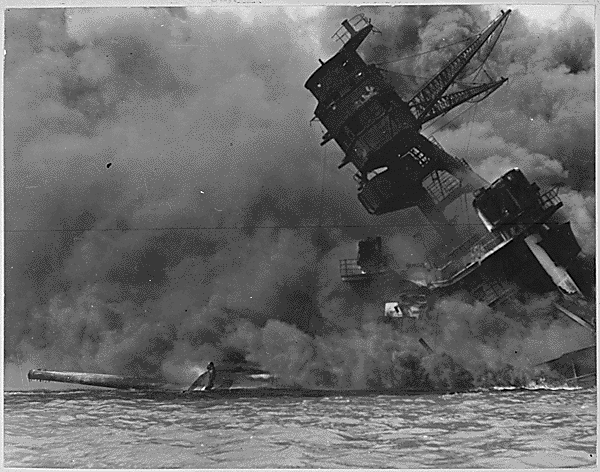
At 0800 hours on Sunday, December 7, 1941, a cacophony of unfamiliar noises on Ford Island assaulted the ears of Seaman 2nd class Richard Girocco. He ran outside of the hangar where he had been working to discover the cause for the commotion.
Ordinarily, Girocco and the other seamen from his PBY squadron (‘patrol bomber’) would have been resting on their bunks during their weekend leave.
But on that day – December 7, 1941 — they had been ordered to arrive early for work. Their duties included loading equipment to be transported from Pearl Harbor to Perth, Australia.
At first the sight of planes overhead made Girocco think the Army Air Corps was dropping flour sacks for target practice.
But as he and the others gazed upward, they noticed machine gun fire erupting from the planes. At that point the young seamen thought the American flight crews were carrying their maneuvers too far.
Then, with growing horror, Girocco and the other sailors realized the bullets were not part of a drill.
The planes had big red balls painted on the sides. They dropped low over Ford Island, their aviators firing, spewing their vitriolic bombs with precision at the men, ships, and everything below. They belonged to the Japanese Imperial forces.
Pearl Harbor was under attack!
**
Upon landing at the U.S. territory of Hawaii In November 1941, Dick Girocco thought he was in paradise. “There was lots of green water and sand,” he said.
Note: The Republic of Hawaii had become a territory of the U.S. in 1898. It would not become that nation’s 50th state until 1959.
Prior to enlisting in the Navy, Girocco, a native of Milwaukee, Wisconsin, had worked at a forestry camp in Wisconsin for the Civilian Conservation Corps. “I earned $30 a month,” he said. He sent home $22 for his family.
After completing basic training at Great Lakes Naval Training Center near Chicago, Girocco attended aviation machinist school at Puget Sound Naval Shipyard in Seattle.
Upon arriving in Hawaii, he was assigned to the USS Saratoga patrolling the islands.
Life had been easy with daily chores and camaraderie among the sailors.
That all changed as the Japanese planes destroyed ships, planes and men in their paths.
Girocco’s first impulse upon realizing his life was in danger was to run back inside the hangar. But he was afraid of attracting attention and chose a closer means of safety.
The Navy had begun a project of transporting water from the coast to the hangars. Several feet of pipe lay close by.

Diving inside a section, Girocco watched in horror as a series of bombs hit the USS Shaw. The destroyer had been sitting in the Navy yard dry dock.
When the ship exploded, Girocco flew through the air, landing in a nearby ditch. He couldn’t see, but he could still hear the noise and feel the concussion of successive explosions.
As Japanese bombers set off ammunition in hangars, Girocco and other naval personnel were frozen in shock “All we could do was wait for instructions from anyone,” he said.
Girocco later learned that prior to attacking Pearl Harbor, the Japanese Imperial Navy aircraft had bombed the nearby U.S. Naval Air Station on the east coast of Oahu. They immobilized 27 Catalina PBY seaplanes – ‘flying boats’ — which was devastating as the planes could have provided defensive maneuvers.
When the Japanese planes finally flew off, Navy personnel quickly set to work, trying to establish order. A hangar was made into quarters. A barracks along Battle Ship Row was converted to a hospital.
For days Girocco and other uninjured sailors looked for survivors in the oil-filled waters. “We did rescue flights with PBYs,” he said. “The planes could land on water to retrieve survivors.”
Rubber rafts were used to retrieve dead bodies.
News about the unmitigated attack spread to Washington DC and other parts of the U.S. While most Americans had no idea where or what Pearl Harbor was, all were incensed at the deaths of more than 2,400 Americans.
On December 8, 1941, during a moving speech to Congress, President Franklin D. Roosevelt urged its members to declare war on the Axis powers of Japan, Italy and Germany, which they did.
Richard Girocco remained in the U.S Navy during the war. After serving more than 20 years, he retired as a Petty Officer First Class. He volunteered at the Pearl Harbor Aviation Museum where he told visitors about his love for his country. “It was a good experience being in the Navy,” he said. “The attack was rough, but I was glad to serve my country.”
**
In 1964, Ford Island was designated a National Historic Landmark. As of 2011, the National Trust for Historic Preservation listed the island as one of the United States’ most-endangered historic sites.
**
Tour of Pearl Harbor
In 2019, my husband John (Air Force retiree) and I vacationed in Oahu. We chose that island specifically because of its military importance.

We found this interesting window at the Pearl Harbor Aviation Museum. The panes missing were shot out during the invasion. The military chose to not replace them as permanent stark reminders of the devastation on that day.

2. At the time we arrived at Ford Island, the Arizona exhibit was under reconstruction. A tour boat operator had run into it, making it off-limits during repairs.
That was most disappointing. But, as there was nothing to do about it, we took photos from our tour boat and accepted that we would have to return someday to see the bubbles of oil appear on the surface from the sunken ship. I look forward to that time.

3. One thing struck me about the area around Pearl Harbor – it was not nearly as large as I had expected. With battleships anchored there, I had thought they would have to be some distance away from each other to avoid collision. But from the location of these markers, it appears that was not the case.
The point is, their proximity to each other made it even easier for the enemy to hit a target.
In this photo we see the locations of the USS West Virginia and Tennessee. Re-read earlier posts to refresh your memory about the destruction caused that day.
**
Check out events in your area commemorating the 80th anniversary of this attack at Pearl Harbor.
The National World War II Museum in New Orleans is planning events around this anniv as well. Check out their informative website.
Next week:
How did Hawaiians react to the attack to their homeland?
**
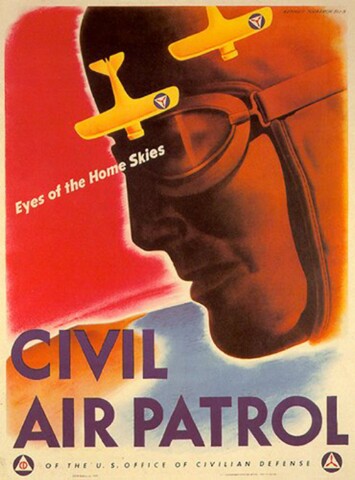
Finally, I’d be remiss if I didn’t recognize today at the 80th anniversary of the org known as Civil Air Patrol. As invasion by the enemy was considered a possibility, an effort was made to protect the American homeland. Young people, especially, were instructed about different types of planes to watch out for and given various duties to do after school in this respect.
Our family owes a lot to Civil Air Patrol. Our son joined when he was 12 years old. He stayed in until age 18. They taught him how to march, salute, take care of his body to keep it fit, and to learn much about the military. He did well and was eventually squadron commander of 30+ cadets. The adult leaders also encouraged him to think of applying to the US Air Force Academy. He did so and was accepted. He graduated and today, he is an officer in the Air Force, all due to some dedicated people who we can’t thank enough! Thanks to Sarah Sundin for pointing out this poster at her website.
**
As always, thanks to our veterans for their service. We would not be free without you.
 Vintage Eats of Kayleen Reusser
Thank you for sharing this! My daughter and I met Dick when we toured Pearl Harbor in 2014. I have a picture of the two of them (she was 8). It still brings me to tears every time the picture pops up on my feed in Facebook. I was curious about how Dick was faring, but had only looked for him one other time. Touring the facility and reflecting on the sacrifices made is a solemn occasion, but his presence added such a weight to us understanding the horrific events. Thank you for memorializing and sharing your interview with such a special individual!
Thanks for sharing your thoughts and interest in Dick Girocco! What a wonderful experience for your family to have met him. I’m so blessed to have interviewed 260 WWII — almost all of whom are gone sadly. They were wonderful humble people who just wanted to help their country and people from around the world. It was a privilege to meet each one and write about them.
A sincere thank you for your efforts capturing the stories of our WWII veterans! They are certainly national treasures!
While organizing photos on my computer, I came across this picture of Dick & my son, Dave. Your website came up when I searched for an update on Dick, and though I expected it, I was sorry to learn of his passing.
My dad was an Air Force pilot stationed at Hickam AFB when I was 10-15 years old in the 70’s. My wife & I took our kids to Oahu in 2015 to see some of my old stomping grounds, and of course Pearl Harbor was a required stop! At the time of our visit, Dave was in the process of earning his FAA Airframe & Power Plant licenses on his way to becoming an airline maintenance technician. After class, he and a couple of his classmates spent time helping refurbish a PBY Catalina. The aircraft had been used in firefighting and was being prepared & painted to take part in the filming of the WWII movie, “USS Indianapolis”. (The Indianapolis delivered the atomic bomb components to Tinian Island before being sunk on her next voyage.)
We met Dick Girocco in the hangar on Ford Island in Pearl Harbor. When we learned that Dick had been a flight engineer on the PBY, it gave he & Dave some things to talk about! Dave was 19 years old when we visited, and Dick was 19 during the attack. That gave us a bit of perspective on what our young servicemen went through. Given that the PBY played such a large role in the Pacific theater, Dick seemed somewhat disappointed that the Pearl Harbor Aviation Museum doesn’t have one. Yep, it seems like there should be a Catalina at the museum.
Your blog mentions that Pearl Harbor isn’t as big as one might expect, and I agree! It did seem much bigger, though, when I was a teenager sailing small boats from the Navy Sailing Center. I remember seeing the carrier USS Enterprise depart through the Pearl Harbor channel when my Dad took me to lunch at the Hickam Officers’ Club after getting a haircut. The ship was so close and so huge! It took a few decades before I gained some more perspective. I went on to become a Coast Guard C-130 pilot and then an airline pilot. The first time I landed at Honolulu International, we came in from the west right over the Pearl Harbor channel. I had a great view of the entire harbor, the Arizona memorial, and the USS Missouri, but I was stunned how narrow the entrance of the channel was! No wonder the Enterprise seemed so close and so huge on that day long ago, and no wonder the USS Nevada beached herself rather than risk getting sunk in the channel!
Our visit with Dick Girocco wasn’t very long that day in 2015, but I would think of him whenever I flew into Honolulu. I would always mention him to my copilots. As you might guess, there is so much I would like to have asked him.
Thank you again for your work chronicling the stories of our veterans!
Merry Christmas to you & your family!
Thanks for your comment. It was very interesting, especially your family’s personal contact with Mr. Girocco. Writing stories of hundreds of WWII vets was my attempt to raise this country’s level of patriotism. Your comments made me think this story accomplished that.